

 By
By 
Fuel prices in Nigeria have been rising and changing frequently, leaving many citizens confused and concerned. From transportation costs to food prices, the impact is being felt everywhere.
So, what exactly is going on? Let’s break it down in simple terms.
What Is Happening to Fuel Prices?
In recent times, the price of petrol (PMS) in Nigeria has increased significantly. Prices now vary across different states and filling stations, making it difficult for many Nigerians to keep up.
This didn’t just happen overnight—it’s the result of several key economic factors and government decisions.
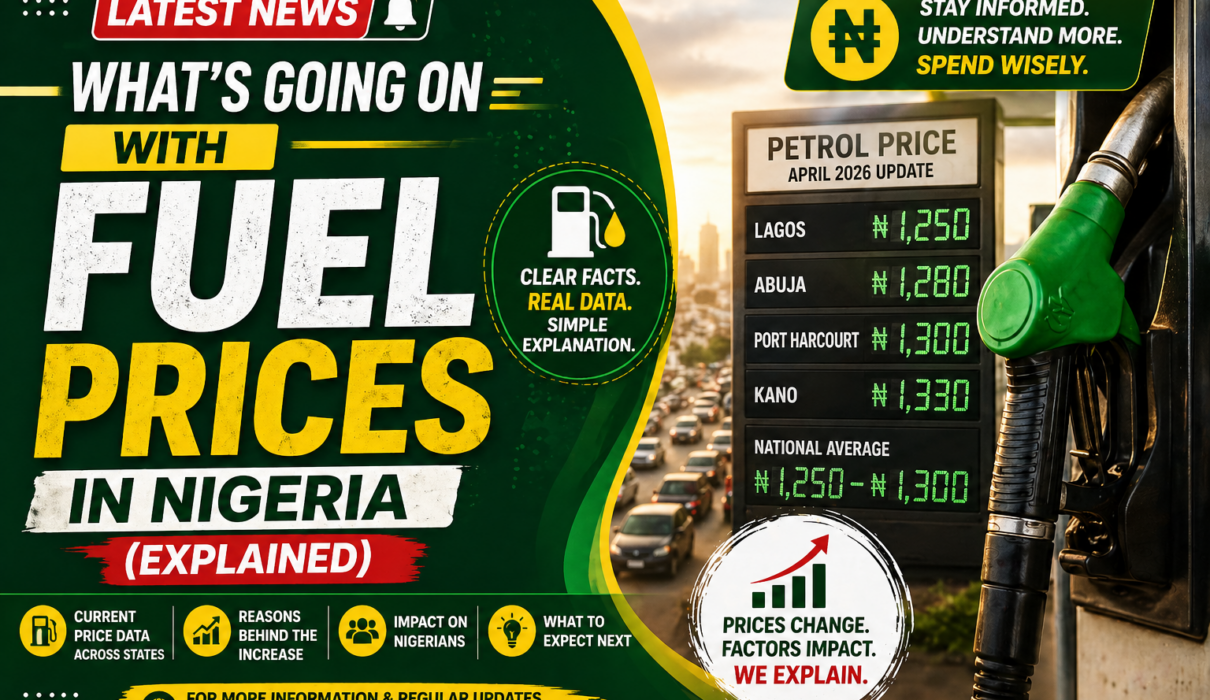
Current Fuel Price in Nigeria (April 2026)
As of April 2026, fuel prices in Nigeria are not fixed and vary depending on location and supply conditions.
- National average: ₦1,250 – ₦1,300 per litre
- Lagos: Around ₦1,250 per litre
- Other states: Up to ₦1,330 per litre in some areas
In recent weeks, prices have fluctuated slightly, dropping in some areas and rising in others. This shows that fuel prices in Nigeria are highly unstable and can change at any time.
👉 Fuel prices in Nigeria currently range between ₦1,250 and ₦1,330 per litre as of April 2026, depending on location and supply conditions.
Note: Prices may change at any time due to market conditions, exchange rates, and global oil prices.
Why Prices Differ Across Nigeria
Fuel prices are not the same everywhere because of:
- Distance from fuel depots
- Transportation and logistics costs
- Supply availability
- Local demand
For example, areas closer to ports like Lagos often have slightly lower prices, while regions farther away may pay more.
1. Removal of Fuel Subsidy
One of the biggest reasons for the increase is the removal of fuel subsidy.
Previously, the government covered part of the cost of fuel. Now that subsidy is gone, prices are determined more by market forces.
What this means:
- Fuel is more expensive
- Prices can change anytime
- Government spending on subsidy has reduced
2. Exchange Rate Issues (Naira vs Dollar)
Nigeria imports a large portion of its fuel, and payments are made in dollars.
As the naira weakens, the cost of importing fuel increases—and that cost is passed on to consumers.
What this means:
- Higher dollar rates = higher fuel prices
- Continuous price fluctuations
3. Transportation and Distribution Costs
Moving fuel across the country also adds to the final price.
Challenges include:
- Poor road infrastructure
- High logistics costs
- Supply chain issues
4. Deregulation of the Oil Sector
The oil sector is becoming deregulated, meaning private companies now play a bigger role in pricing.
What this means:
- Prices are no longer fixed
- Competition may increase over time
- Prices may stabilize in the future
How This Affects Nigerians
Rising fuel prices affect everyday life:
- Higher transport fares
- Increased food prices
- Rising cost of living
- Pressure on small businesses
Is There Any Hope?
There is some optimism that local refining, such as operations from the Dangote Refinery, may reduce reliance on imports over time.
However, in the short term, Nigerians should expect continued fluctuations.
For accurate and up-to-date updates, visit the official Nigerian Midstream and Downstream Petroleum Regulatory Authority (NMDPRA):
https://www.nmdpra.gov.ng
Final Thoughts
Fuel price changes in Nigeria are driven by multiple factors—government policies, global oil markets, and the value of the naira.
The best thing you can do is stay informed and plan your spending wisely.
While the situation may be challenging, understanding it helps you make better decisions.
For More Information
For accurate and up-to-date updates, visit the official government and energy regulatory platforms.
